How to Feng Shui Your Living Room for Connection and Calm
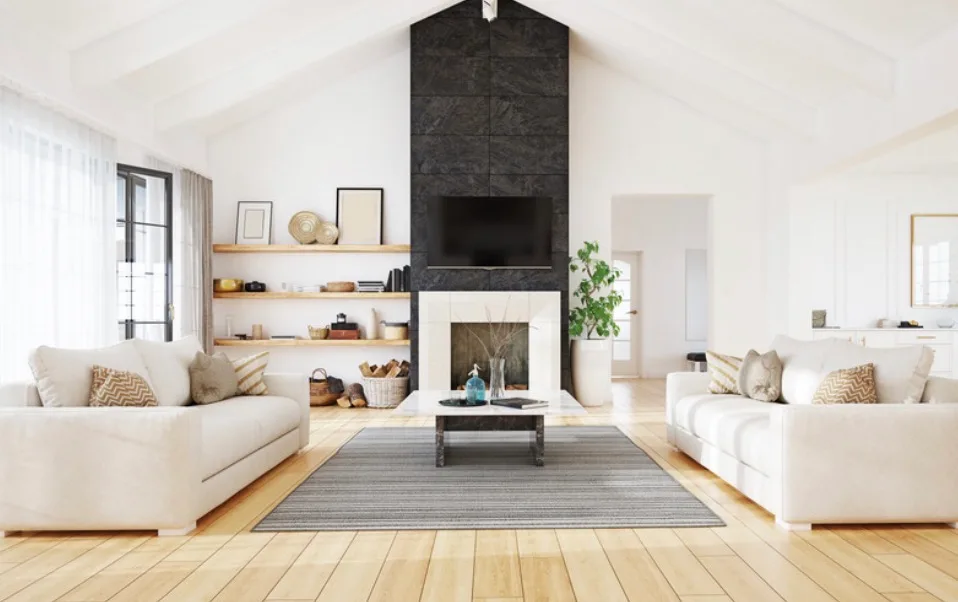
You enter your home after a long day, walk into your living room, and instead of feeling comfort and calm, something feels off. The sofa hugs the wall, the TV dominates every sightline. Nobody really lingers in there, even though it's technically the biggest room in the house.
This is one of the most common things I notice during in person consultations on the Gold Coast and remote sessions globally. Beautiful homes, often with gorgeous natural light and open-plan layouts, where it should be the star of the show but simply isn't doing its job.
The décor isn’t necessarily wrong, but the energy hasn't been considered. You know this because conversations stay surface-level, family members drift to separate screens, and the space feels more like a waiting room or worse - dumping ground - than a sanctuary.
The living room is the social heart of your home. In Flying Stars Feng Shui, it governs how relationships and community energy move through your space. When it’s right, it becomes a room people actually want to gather and connect in.
Here's where to start.
Anchor the Room with a Command Position
In Feng Shui, the command position is one of the most important concepts you can apply and the living room is a perfect place to use it.
The main sofa (or the seat where the household's primary decision-maker tends to sit) should face the doorway without being directly in line with it. You want a clear sightline to the entrance, with a solid wall behind you. This arrangement creates a felt sense of safety and ease your nervous system isn't quietly scanning for threats, so you can actually relax and be present with the people in the room. Next, move your sofa off the wall - leave space for the air to circulate behind it - this is crucial for good energy flow.
If your sofa floats in the middle of the room with no wall support, consider:
- A low console table or credenza placed behind the sofa to create a visual anchor
- A large area rug that defines the seating zone as its own contained space
- A bookshelf or plant arrangement that gives structural weight to that wall-less side
This single adjustment changes how people feel in the room, even if they can't articulate why.
Support Conversation with Thoughtful Furniture Placement
Energy — or chi — needs to meander gently through a space, not race through it or stagnate in corners. The way you arrange furniture either invites people to face one another or subtly discourages it.
For genuine connection, arrange seating so it faces inward, toward the group, rather than all pointing at the television. A U-shape or L-shape configuration works beautifully for this. Chairs and sofas at angles that allow easy eye contact signal to the space (and to your guests) that conversation is welcome here.
Also pay attention to what's blocking the natural pathways through the room. If you have to navigate around a coffee table or squeeze past a chair to move from the kitchen to the back door, chi is getting squeezed in exactly the same way. Clear, comfortable walkways allow energy to circulate freely, and practically speaking, they make your home feel more relaxed to move through.
One thing I often see is oversized furniture crammed into a space. If the room feels heavy or crowded, it's worth asking whether the scale of your furniture is actually suited to the proportions of the room. Heavy pieces weigh on your mind and on your shoulders.
Balance the Five Elements to Calm the Energy
Once the layout is working, look at the elemental balance of the room. Classical Feng Shui works with five elements, Wood, Fire, Earth, Metal, and Water, (see my earlier blog post dedicated to this) and a well-balanced living room will have a considered expression of each.
In practice, this doesn't mean five separate bowls of crystals. It means looking at what's already present:
- Wood: Plants, timber furniture, artwork featuring trees or botanical forms, green and teal tones
- Fire: Warm lighting, candles, triangular or pointed shapes, reds and deep oranges
- Earth: Ceramics, stone, low square furniture, sandy, terracotta and yellow tones
- Metal: Metallic finishes, circular or oval forms, white, grey and soft gold tones
- Water: Flowing shapes, glass, mirrors, deep navy or charcoal hues, actual water features
Most living rooms on the Gold Coast are naturally strong in Wood (greenery, timber floors, rattan) and Water (views, proximity to the coast, lots of glass). What's often missing is Earth — the grounding. Depending on your geographical location this will differ and so you need to really take stock of the strengths and weaknesses - elementary speaking - in your home.
If a room feels too stimulating or conversations tend to get heated, you likely have too much Fire or Wood energy. Cool it with Earth and Metal tones, and softer, lower lighting.
Manage the Screens (Yes, Really)
This isn't about banning the television — it's about being intentional with how it sits in the room's hierarchy. When a large screen dominates the main wall directly opposite the primary seating, it becomes the room's focal point by default. Every sightline, every conversation gets pulled toward it.
A simple Feng Shui approach: give the television its own zone, slightly to one side, and create a secondary focal point that isn't a screen — a piece of artwork, a fireplace, a beautiful plant arrangement, a view to the garden. This gives the room's energy somewhere else to land, and gives people's attention somewhere else to rest.
If you have a smart TV that displays artwork when idle, use it. A calm, nature-based image carries very different energy than a black mirror staring back at you.
Let the Light Work For You
Subtropical light is one of Queensland's genuine gifts, and it's worth working with rather than against. Wherever you are in the world, use as much natural light as you can. Harsh overhead lighting flattens a room's energy and tends to create a clinical, transactional feel, not what you want in a space meant for rest and connection.
Layer your lighting: a floor lamp in one corner, a table lamp on a sideboard, perhaps a pendant over a reading chair. Warm globes (2700K–3000K) support the kind of easy, amber-toned atmosphere that invites people to slow down and stay a while.
In the evening especially, lowering the lighting, even just dimming what you have, signals to both the room and your body that the pace is shifting. It's one of the most accessible and underused Feng Shui tools available to you.
---
If you're ready to look at your home and align it for wealth, connection and ease there are a few ways you can work with me.
June services have closed but if you want to transform your home in July drop me an email and you'll be first in line next month.
Ready to transform your space?