Feng Shui for Small Spaces: Apartment Living Done Well
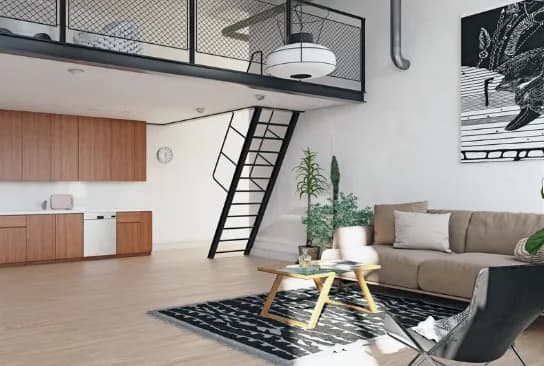
Apartments are so fun, you step inside and the whole home reveals itself in one go. The kitchen, the lounge, the balcony, maybe the foot of the bed tucked behind a half-wall. There's a particular honesty to apartment living. Nothing really hides. And that's precisely why Feng Shui matters so much here: when space is at a premium, every object, every corner, every flow of movement is amplified.
I work with a lot of apartment and flat dwellers, from high-rise units on the GC to compact two-bedders in Devon. The worry I hear most often is that Feng Shui only works in large, detached homes with grand entrances and sprawling gardens. It simply isn't true. Flying Stars Feng Shui is about how energy, or chi, moves through and settles within a space and the size of its footprint doesn't diminish that. If anything, it makes your choices more powerful.
Chi Needs Room to Breathe, Not Roam
The first thing I notice about smaller apartments is how full they feel. Every wall gets a shelf, every corner a plant stand, every surface a cluster of trinkets. But chi behaves a little like air and water, it wants gentle, meandering movement, not a cluttered obstacle course or a straight, rushing channel.
In an apartment, the two most common issues are stagnation and rushing. Stagnant chi pools in overcrowded corners, under beds packed with storage, and inside wardrobes crammed to bursting. Rushing chi races in a straight line, often from the front door directly to a balcony door or window, pulling your home's energy and your focus straight out to sea.
A few grounded adjustments:
- Clear the entry. In apartments your actual front door isn't always where the good energy enters, this is usually through your balcony or windows. I would still keep the first few steps inside open and uncluttered though, so energy can circulate rather than hit a wall of shoes and bags.
- Soften a straight shot. If your door aligns directly with a window or balcony, place something to gently redirect the flow, a round-leafed plant, a console with a lamp, or a rug that shifts the eye.
- Edit, don't cram. In a small home, three meaningful objects hold more power than thirty. Let your surfaces breathe.
The Bagua Still Applies — In Miniature
One of the loveliest things about Classical Feng Shui is that the bagua, the energetic map of your home, works at any scale. A studio apartment has the same nine life areas as a six-bedroom house: wealth, relationships, career, health, and so on. You simply lay the map over your floor plan from the front door.
In open-plan apartments, several bagua areas often share one room. Your lounge might hold your wealth corner, your family area, and your career zone all at once. This isn't a problem it's an opportunity to be intentional with zones.
- Anchor each area with purpose. Your reading nook, your dining spot, your work-from-home desk, give each a defined sense of place, even if they sit metres apart.
- Use the five elements to differentiate. A touch of water energy (flowing shapes, blues, reflective surfaces) in the career area; warm earth tones and ceramics in the relationship corner; healthy wood energy through plants in the family zone.
- Mind the missing corners. Modern apartments are rarely perfect squares. L-shaped layouts create 'missing' bagua areas. A well-placed mirror, light, or plant on the adjacent wall can symbolically draw that energy back in.
Make Light and Air Your Allies
Small spaces thrive on natural light and fresh, moving air. A home that feels stuffy and still usually has stagnant energy to match. Let the breeze move through regularly. Open windows on opposite sides when you can to create a gentle cross-flow.
For light:
- Use mirrors thoughtfully. A mirror can double light and expand a cramped room, but placement matters. Reflect something beautiful, a view, a plant, a pool of light, never clutter, and never position one directly facing the bed, where it can disturb sleep.
- Honour the natural light you have. Keep windows clean and coverings light. .
- Lift dark corners. Where light can't reach, a lamp dispels the stagnation that gathers in gloom.
The Bedroom: Protect Your Rest
In apartments, the bedroom is often the smallest, most compromised room, squeezed in beside the laundry, backing onto a lift shaft, or doubling as a study. Yet it's the single most important space for your wellbeing, because you're at your most receptive while you sleep.
Guard it carefully:
- Position the bed in the command position where possible, able to see the door without being directly in line with it, with a solid wall behind the headboard for support.
- Resist the under-bed storage temptation. I know space is precious, but a bed sitting on a stockpile of boxes traps stagnant chi right beneath your resting body. If you must store, keep it to soft items like spare linen, and keep it tidy.
- Separate work from sleep. If your desk shares the bedroom, screen it off at night with a folding divider or even a draped cloth. Your nervous system knows the difference.
Small Space, Strong Intention
A small home is not a lesser home. Some of the most harmonious, nourishing spaces I've ever analysed have been modest apartments where the owner was thoughtful about every single choice. Constraint breeds clarity. When you can't have everything, you learn to keep what truly supports you.
Start with one room. Clear what no longer serves you, let the light and air in, and notice how the energy, and your own mood, begins to shift. That's Feng Shui working, quietly, in the background of your daily life.
you are ready to better understand your home an Energy Map takes the guesswork out of locating the 9 life themes and gives you the confidence to make meaningful changes.
For a more powerful transformation a full Energy Analysis will deliver exact Feng Shui remedies to align your space for wealth, success, connection and ease. Either way, you're already heading in the right direction.
Ready to transform your space?